Prometric Doors and Panic Moments: Reclaiming the Points You Lose Before Question One
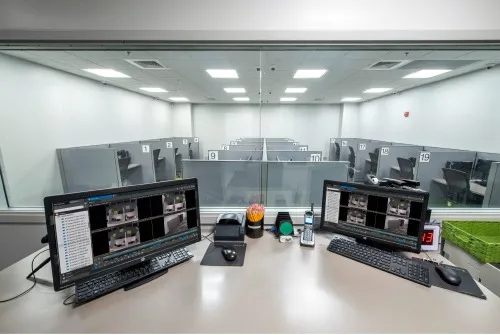
Photo: Prometric test center exam room computer testing station, via assets-global.website-files.com
Here is an opinion we hold firmly at BankExam Portal: exam-day logistics cost more points than question difficulty does. Not because the content is easy — it is not — but because the content gets months of preparation while the logistics get none. Candidates who can solve a two-step quantitative problem under time pressure will still arrive at the test center with a prohibited calculator, a mismatched name on their ID, and a heart rate that makes question one look like a foreign language.
The fix is unglamorous and entirely within your control.
The Anatomy of a Prometric Check-In
For candidates who have never sat a FINRA or professional licensing exam, the process looks like this:
- Arrival and check-in. You arrive at the center — typically a Prometric site — and present your government-issued ID. Your name on the ID must match your registration exactly. A middle initial on one document and not the other has turned candidates away at the door.
- The locker ritual. Everything comes out of your pockets: phone, watch, wallet, keys, even gum. Prometric centers provide a small locker. Phones must be powered off, not silenced.
- Sign-in and photograph. You sign a logbook, have your photo taken, and in many cases provide a palm vein scan or signature.
- The materials briefing. You receive scratch paper or an erasable noteboard and, depending on the exam, a basic calculator — because personal calculators are almost universally banned.
- The wait. Other candidates filter in and out. You sit in a monitored testing room with noise-reducing headphones or earplugs available on request.
None of this is difficult. All of it is stressful if you did not expect it.
Where Points Quietly Disappear
The ID mismatch. The single most common reason candidates are denied entry. Verify the name on your registration against your ID weeks before exam day, not the night before.
The calculator problem. Candidates who have done every practice problem on a graphing calculator arrive to find they are handed a basic four-function device. Practice your final two weeks of prep on the exact calculator you will be given.
The timing miscalculation. Arriving 15 minutes before your slot, only to spend 20 minutes finding parking, is a self-inflicted wound. Arrive 45 minutes early and let the extra time be boring.
The nerves spiral. Anxiety is not a character flaw; it is a physiological state, and it is trainable. Candidates who rehearse the check-in process mentally — who know exactly what the room, the locker, and the first five minutes will look like — report markedly calmer starts. Familiarity is a sedative.
The Pre-Exam Checklist
Print this. Use it.
One week before:
- Confirm your registration name matches your ID exactly
- Visit the test center location (in person if possible) to learn the route and parking
- Verify your calculator policy and switch practice to the approved device
The night before:
- Assemble: primary ID, secondary ID if required, registration confirmation, directions, snacks and water for the locker
- Set two alarms
- Do a light review only — no new material, no full mock exams
Exam morning:
- Eat a familiar breakfast; nothing experimental
- Arrive 45 minutes early
- Leave your phone in the car or the locker, powered off
- Use the restroom before check-in, not after
In the room:
- Spend 60 seconds on slow breathing before the timer starts
- Treat the first three questions as a warm-up; read them twice
- If panic rises, close your eyes for ten seconds and reset your posture
The Case for Treating Logistics as Curriculum
We will go further: build a mock exam-day rehearsal into your final week. Take a full practice test at the same time of day as your real appointment, using the same calculator, with your phone in another room. Candidates who rehearse the entire experience — not just the questions — walk into Prometric centers with an advantage that has nothing to do with aptitude.
The exam will test what you know. The test center will test everything else. Prepare for both, and stop donating points to the parking lot.